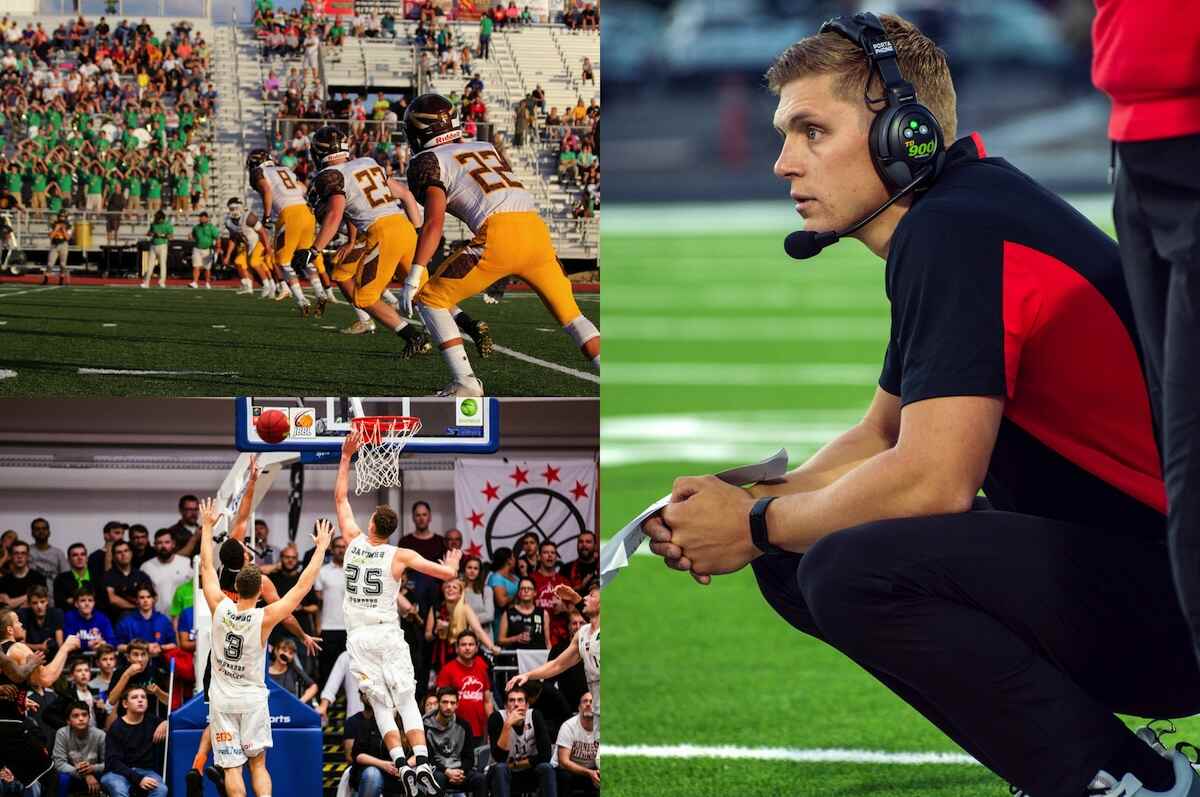
There is a prevailing belief that in collegiate and professional sports, teams perform better at home when compared to playing on an opposing team’s court, rink, or field. The assumption seems logical, but does data back it up? Research conducted across a wide spectrum of U.S. sports indicates the following:
- Soccer has the largest average home advantage, with a high of 69.1% in US Major League Soccer (MLS)
- In the National Basketball Association (NBA) 62.7% of games are won by home teams
- In the National Hockey League (NHL) 59% of games are won by home teams
- In American football (NFL and NCAAF) 57.6% of games are won by home teams
- In Major League Baseball (MLB) 54.1% of games are won by home teams
In sports, where teams can miss advancing through playoffs by the slightest margin, bringing greater balance to the home vs versus away scale may make a championship squad. But of course, this depends upon the performance of players. Given that they collectively struggle outside of their jerseys’ area codes, programs should consider doing all they can to enhance performance within the ranks by working with individuals to overcome whatever it is that gets in the way of peak productivity. Some may speculate that the issue is travel, citing circadian disruption and fatigue as being precursors to poor performance. However, recent research shows no distinct difference in win probability across different travel distances for away games. So why are away games harder for athletes?
The answer may very well be found in the psyche of players and how away-from-home competitive environments may negatively alter emotions, feelings, and behavioral health to the point that they underperform. And if so, work to enhance performance should focus on identifying triggers that compromise pre-game and in-game mental wellness followed by an investment in improving athlete mindset. Let’s review.
Why Players May Struggle with Away Games and How Mental Health Support Can Turn the Tables on the Win-Loss Record
Anxiety When Playing on Opposition’s Home Court
Studies confirm that elite athletes are more prone to anxiety than the average person, with a prevalence rate of anywhere between 30 and 60 percent. Symptoms of anxiety can range from bothersome to crippling. Examples of those that may directly impact in-game performance include but are not exclusive to the following:
- Increased heart rate
- Rapid breathing
- Trembling and shaking
- Dizziness and subsequent imbalance
- Fatigue
- Headaches
- Muscle aches and tension
- Loss of concentration
- Loss of confidence
Research suggests that feelings of anxiety may be elevated during away games. This phenomenon is potentially due to the following factors:
- Overwhelming exposure to audible and visual prodding and ridicule from an opposing team’s fan base
- Overwhelming exposure to visuals of an opposing team’s branding (colors, logos, et cetera)
- Unfamiliarity of surroundings
Interestingly, home-court advantage (or away-court disadvantage) can also be a self-fulfilling prophecy. If an “away” player perceives that an opposing team has the upper-hand by competing at home they may consequently underperform.
In identifying factors, or triggers, to anxiety experienced on the road, players can better prepare themselves with learned coping strategies (from a mental/behavioral health provider). View more on sports anxiety and how to overcome it, right here.
Anger When Playing on Opposition’s Home Court
Some athletes may or may not feel anxiety or stress when playing on the opposition’s home court or field, but they may exhibit feelings of anger and irritability. Like with anxiety, research confirms that elite athletes exhibit higher levels of anger and aggression than non-athletes. Symptoms of anger that may directly impact in-game performance include but are not exclusive to the following:
- Aggressive verbal or physical outbursts against opposing players, coaches, fans, and referees
- Increased heart rate or heart palpitations
- Rapid breathing
- Excessive sweating, trembling, and shaking
- Headaches
- Muscle tension
- Loss of concentration
Research indicates that athletes tend to report higher levels of anger when competing away from home. The same triggers that lead to in-game anxiety (see above) may also lead to in-game anger and consequently compromise performance. Further, away players may be more likely to perceive unfair calls from referees, assuming that there may be bias in that referees will be swayed by home audience/attendee cues.
A recent article on anger management for elite basketball players (view here) provides a more comprehensive breakdown on the issue, and how mental health support will help conquer it.
Sports Bettor Threat to Away Game Players
A study conducted by Cambridge University indicates that sports bettors exhibit home bias, and therefore they tend to wager on their home team more often. Researchers suggest that this phenomenon can be caused by optimism bias – an idea that people’s desire exhibits causal influence on their expectations. They overestimate the likelihood of positive events and underestimate the likelihood of negative events.
How may this impact how players and teams underperform on the road? An unfortunate trend has been plaguing collegiate and professional sports since the legalization of sports betting across the majority of U.S. states – player harassment by disgruntled sports bettors. Athletes have been receiving verbal and online abuse and threats from sports betting spectators. This piles on to the anxiety and anger that they may already feel when being ridiculed by the average home-team fan. Without intervention, players will be triggered and may underperform unless they are provided with healthy coping strategies.
How Kindbridge Can Help Teams Win More Away Games
As indicated above, athletes experience elevated instances of anxiety and anger when playing away games, which can compromise performance and reinforce home versus away statistics referenced in the introduction of this article. Moreover, the emotional challenges presented by an opposing team’s environment may elevate signs and symptoms of other mental health concerns that are common among elite athletes (view more here). For these reasons, interventions to help improve away game productivity must be founded in mental and behavioral health support. With an improved mindset, players may find the same psychological motivation that they normally receive when playing in front of their home crowd, from within.
Individual athletes who are ready to improve their mindset and experience enhanced performance across all aspects of their game (away game productivity included) are encouraged to connect to Kindbridge to discuss mental health support strategies. Tap the graphic below to get started:

Meanwhile, athletic programs that are ready to invest in athlete/team mindset and gain a competitive edge can connect to our management team by clicking/tapping the graphic below:

Further Questions About Our Athlete Programs?
CALL +1 (877) 426-4258
OR