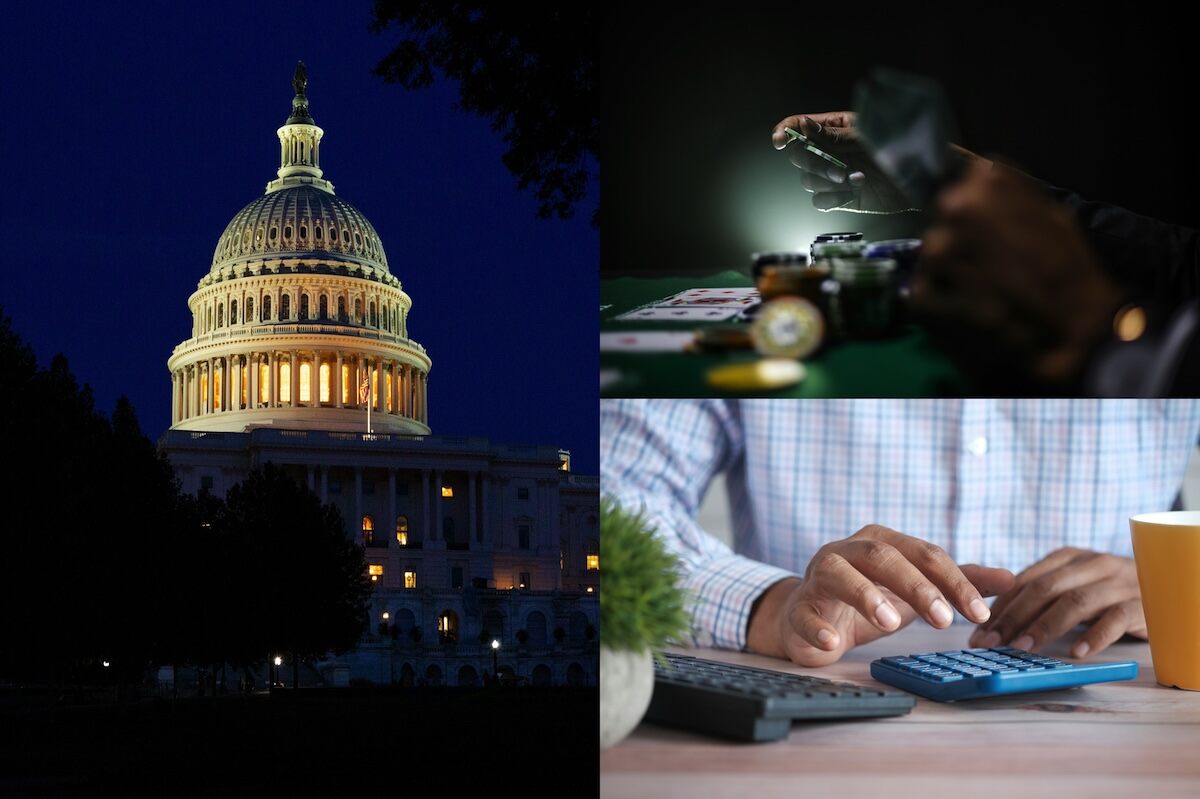
On July 1, 2025, the Senate passed the “One Big Beautiful Bill Act” (OBBBA). Bill 51-50 is a budget reconciliation law that contains tax and spending policies that form the core of the current Presidential administration’s agenda. Within OBBBA is something that is making habitual gamblers along with the gambling industry let out a bemoaning “ohh boy” in anticipation of what may come. What is most concerning, however, are the mental health implications. The tax law’s passage does not just aggravate gamblers, it may increase adoption of unregulated casino gaming and sports betting platforms which do not offer guardrails to protect vulnerable members of society. Below is a succinct summary of what concerned stakeholders need to know about.
Overview of How the One Big Beautiful Bill Act (Bill 51-50) May Increase the Risk of Problematic Gambling Behavior in the United States
I. Gambling Tax Law Before OBBBA
Up until now, modern U.S. gambling tax law rules have been as follows:
- Americans could deduct 100% of gambling losses, but only to the extent of their winnings. They are required to report all the money they win as taxable income on their return, with losses only claimable to offset income from gambling winnings.
- The amount of gambling losses deducted can never exceed the winnings reported as income.
- The gambling loss deduction is only available to those who itemize their deductions.
The part about itemizing deductions is problematic in itself, in that it incentivizes riskier betting behavior. You can read more about this problematic feature (which remains despite OBBBA) in the following article:
II. Gambling Tax Law After OBBBA
Contained with OBBBA, is a gambling tax law stipulation that gamblers can now only deduct up to 90% of their losses.
Let’s take a look at how this works, based on the average male problem gambler debt in the United States, which has a median of $72,500 USD.
Under the old system, a gambler who wins $72,500 and loses $72,500 has a breakeven net profit of $0, indicating that they would owe no tax on their gambling income for the annum.
Under the new OBBBA system, a gambler who wins $72,500 and loses $72,500 can only deduct $65,250 (90% of $72,500). They are taxed as if they made $7,250 in profit ($72,500 – $65,250) even those they did not. Depending on how much income was earned from other sources (given that gambling is generally a “side hustle”) this could add thousands to a gambler’s tax bill for the year. And what about sharp bettors and so-called professional gamblers who claim gambling as their primary form of income? The new OBBBA tax law has the potential to be ruinous to their strategy of high-volume, low-margin wagers to secure consistent profits, such as arbitrage betting.
III. How Gamblers Are Now Encouraged to Enter the Unregulated Market
As addressed in Section I above, prior to OBBBA, U.S. federal gambling tax law and its itemizing deductions feature already encouraged more risky gambling behavior (view here). OBBBA adds another layer to risky gambling behavior, but in a different way.
Under Bill 51-50, gamblers are disincentivized to report their winnings with 100% transparency. However, knowing that wagers they make with regulated casino gaming, sports betting, and daily fantasy sports (DFS) platforms can be monitored by the IRS, they understand that their risk of being caught for tax evasion is elevated. Subsequently, they may look to the offshore unregulated market which offers easier ways to “hide” transitions via the application of cryptocurrency.
The problem (legalities aside) is that unregulated offshore gambling platforms are not beholden to Responsible Gaming mandates in the United States. Further, these operators have no protections in place to monitor for problematic gambling behavior among respective player bases, and they certainly do not have partnerships with mental health providers to usher players who opt-in for self exclusion an option to assess their well-being nor get help as required.
Anything that grows American adoption of the unregulated market increases the risk of problematic gambling behavior. Whatever the federal government thinks it’s gaining from the OBBBA gambling tax law update, it could be losing in the mental health of vulnerable citizens, which also has a negative impact on the financial wellbeing of the nation. While gambling can contribute to economic activity through revenue generation for the industry and tax revenue for the U.S. government, the costs associated with problem gambling, including healthcare expenses, lost productivity, and criminal activity, can offset these benefits and negatively impact overall economic output.
Read more about the concern regarding the growth of the unregulated market in the following article:
Perhaps it’s no ethereal coincidence that the sequence of numbers contained in the new bill (5150) is a well-known legal code (and slang) referring to the involuntary psychiatric hospitalization of an individual who is deemed a danger to themselves? Time will tell. Stay tuned as Kindbridge continues to monitor yet another development in America’s problem gambling crisis.
Concerned About Your Relationship with Gambling?
CALL +1 (877) 426-4258
OR
Email help@kindbridge.com