On August 15, 2025, Google Ads announced that they have added yet another U.S. state (Missouri) to the growing list of those that they will accept and run sports betting pay-per-click (PPC) advertisements for, as long as the ads come from certified, state-licensed operators. Below are other key dates in this evolution:
- June 14, 2019: Google Ads began accepting and running ads for sports betting for the first time, from certified, state-licensed operators, beginning in New Jersey.
- July 15, 2024: Google Ads began accepting and running ads for Daily Fantasy Sports operators in Alaska, California, Florida, Georgia, Kentucky, Minnesota, Nebraska, New Mexico, North Carolina, North Dakota, Oklahoma, Rhode Island, South Dakota, Utah, West Virginia, Wisconsin and Wyoming.
- April 30, 2025: Google Ads updated its ad format requirements to allow daily fantasy sports and sports betting ads on the Google TV Masthead in the United States.
This most recent update comes at a time when there is a rising chorus advocating for stricter regulations on sports betting advertising due to concerns about its potential harms to vulnerable individuals and society. It is now clear that the online search giant is fully committed to opening up gambling-related advertising permissions across the United States. In response to concerns, Google Ads points to its certification process that requires operators to demonstrate compliance with state licensing requirements and Google’s gambling advertising policies (view here). Google also references its supposedly strict enforcement standards for gambling advertising violations. However, there is a case to be made that Google is going too far, and that guardrails are not enough to protect millions of vulnerable Americans who will be triggered to bet on sports as advertising regulations come tumbling down. Let’s review.
How Google Ads Evolving Allowance of Sports Betting Advertising Poses a Threat to Americans Who Are Vulnerable to Problem Gambling
Another Layer of Exposure
The most surface level concern, is that Google Ads’ easing policy adds another layer of exposure to sports betting advertising. Isn’t it enough that vulnerable Americans are exposed to an onslaught of sports betting ads while watching TV, scrolling social media, and while in attendance for games at sports bar and stadiums? Sports betting ads have seemingly infiltrated all aspects of American life, and while Google Search has never been a safe space, per se, users were at least spared from sports betting advertising up until now.
Sports Betting Ads to Intercept Help for Problem Gambling?
One area that we anticipate a problem with as it applies sports betting PPC keyword targeting, is with respect to online search for help for problem gambling. There is too much room for interpretation that may confuse the Google Ads platform. Consider the following two search expressions, which we have entered into the Google Ads keyword research tool:
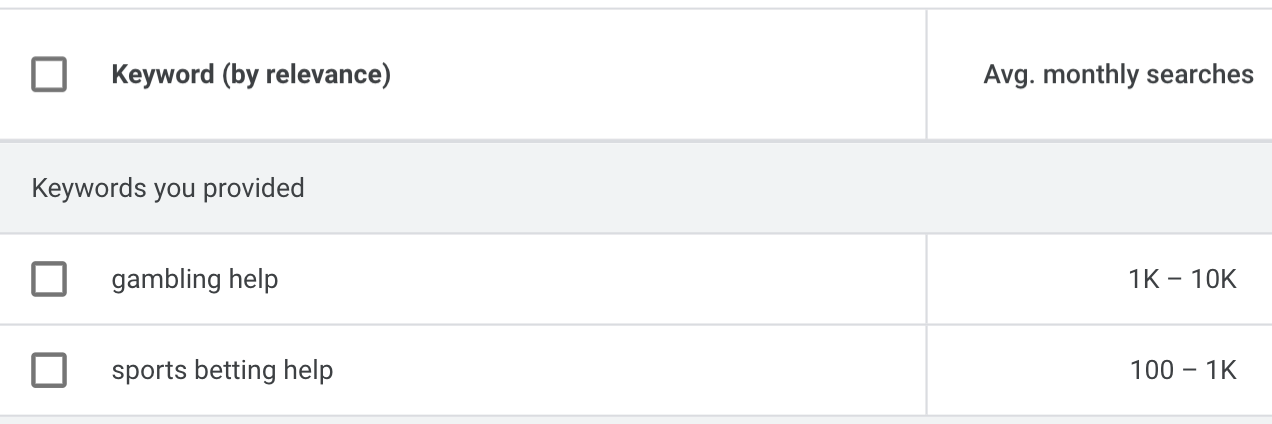
Source: Google Keyword Planner
On the surface these terms seem very similar. However, Google search for “gambling help” delivers organic results specific to support services for problem gambling, while “sports betting help” offers a mixed bag:
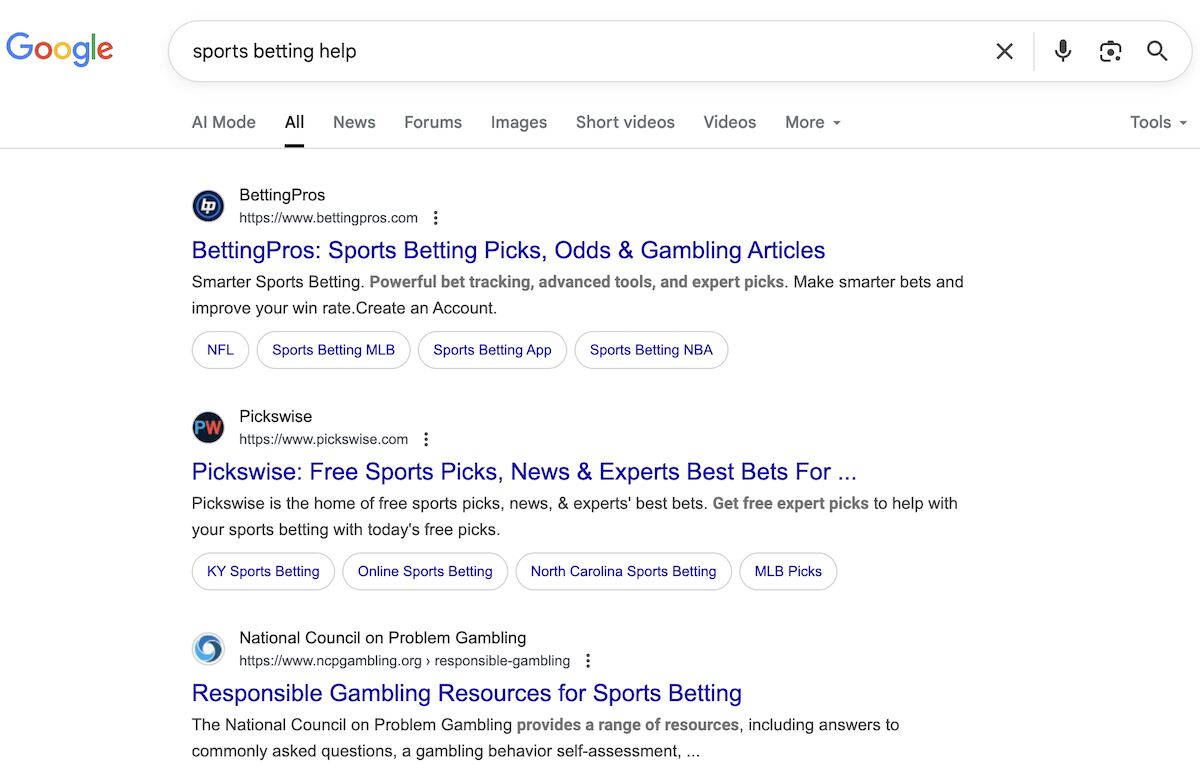
In the first two results, Google delivers sports betting affiliate websites that intend to register new players with sports betting operators that they have partnerships with. The third result, however, is for the National Council on Problem Gambling. The Google algorithm is not clear on the intent of the searcher – is it someone who wants sports betting advice, or someone in need of help? If the latter, consider what it means for them to be exposed to the first two results which are triggers to gamble.
This problem unveils potential for gambling advertisers to exploit the nuance of keywords and semantic association. As Google Ads continues to allow sports betting advertising in other U.S. states, there is potential to see gambling advertisers buy and bid on keyword expressions that may be used by Americans who are not looking for gambling advice, but help to quit gambling.
Can Google not be trusted to keep this from occurring? They do not have a very good track record when it comes to gambling advertisers subverting gambling advertising restrictions, intentionally or otherwise. Keep reading as we expand upon this concern.
Google’s Poor Track Record with Enforcement
For years, far before the 2018 removal of the federal ban on sports betting and Google’s recent allowance of sports betting advertising, unregulated offshore sports betting sites have been able to get around restrictions using a black-hat practice called PPC cloaking.
PPC cloaking is a technique where different content is shown to those who vet Google Ads (and search engine crawlers) than to users clicking on Google ads. It’s a form of deception used to manipulate ad platforms and get around advertising restrictions. As an example lifted directly from the unregulated sports betting market, illegal operators would create website landing pages for books about sports and initiate PPC campaigns that targeted the keyword expression “sports books”. They understood that a proportion of the American sports betting population used “sports books” (vs the more commonly used “sportsbooks”) as a search expression to find websites that offered online sports betting. When submitting the advertisement to Google Ads for review, they submitted a landing page that featured books about sports and ran that ad throughout a given day, even though they had no inventory to sell. Then, when demand for sports betting increased, such as it does in the 24-hour lead-up to the NFL Super Bowl, the operator would swap out the original landing page and deliver users a different landing page to register them to bet on sports, complete with an enticing sign-up bonus. Eventually, Google would get wise to a given scheme and shut it down, but the operator would initiate a whole new PPC cloaking campaign in time for the next big sports betting event.
While the above scenario regarding PPC cloaking is an extreme example of what unregulated operators and gambling affiliates are willing to do to exploit advertising platforms and gamblers, it shows that Google Ads is vulnerable.
Policy Violations Already Exist for Sports Betting in Other Google Products
*Warning: The following section includes screenshots that feature promotional gambling content. If you struggle with problematic gambling behavior and are triggered to gamble by content of this nature, please skip ahead to the conclusion of this article.
Are Americans to trust that Google will uphold its supposedly stringent rules about how sports betting is marketed via PPC? If their history in delivering blatantly promotional sports betting content on the Google News feed is an indicator, the answer is in the negative.
Before exposing how Google is already fast and loose with its policies regarding gambling, let’s first look at what Google News is supposed to be, in their own words:
“Google News aims to promote original journalism and expose users to diverse perspectives.”
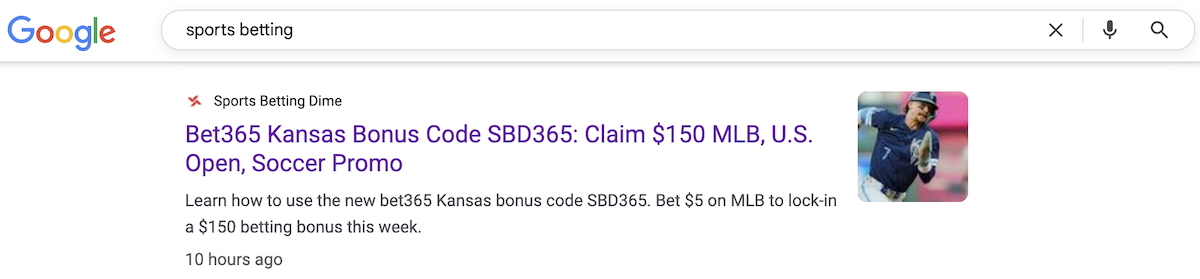
Based on this statement, a Google News search should unveil a collection of newsworthy articles, written by authoritative journalists, discussing developments in the industry along with sports betting in a regulatory context. But in addition to doing so, a Google News search for “sports betting” delivers a wide number of results such as this:
Before we get into what’s wrong with Google News results of this nature, let’s have a look at what Google has to say about leveraging Google News results to promote anything:
“Advertising and other paid promotional material on your pages shouldn’t exceed your content. We don’t allow content that conceals or misrepresents sponsored content as independent, editorial content. Sponsorship, including, but not limited to, ownership or affiliate interest, payment, or material support, should be clearly disclosed to readers. The subject of sponsored content shouldn’t focus on the sponsor without clear disclosure.”
Now let’s look at the above SportsBettingDime (a known gambling affiliate) “article” being delivered in Google News to see if it adheres to Google News’ stated policy regarding ads and sponsored content:
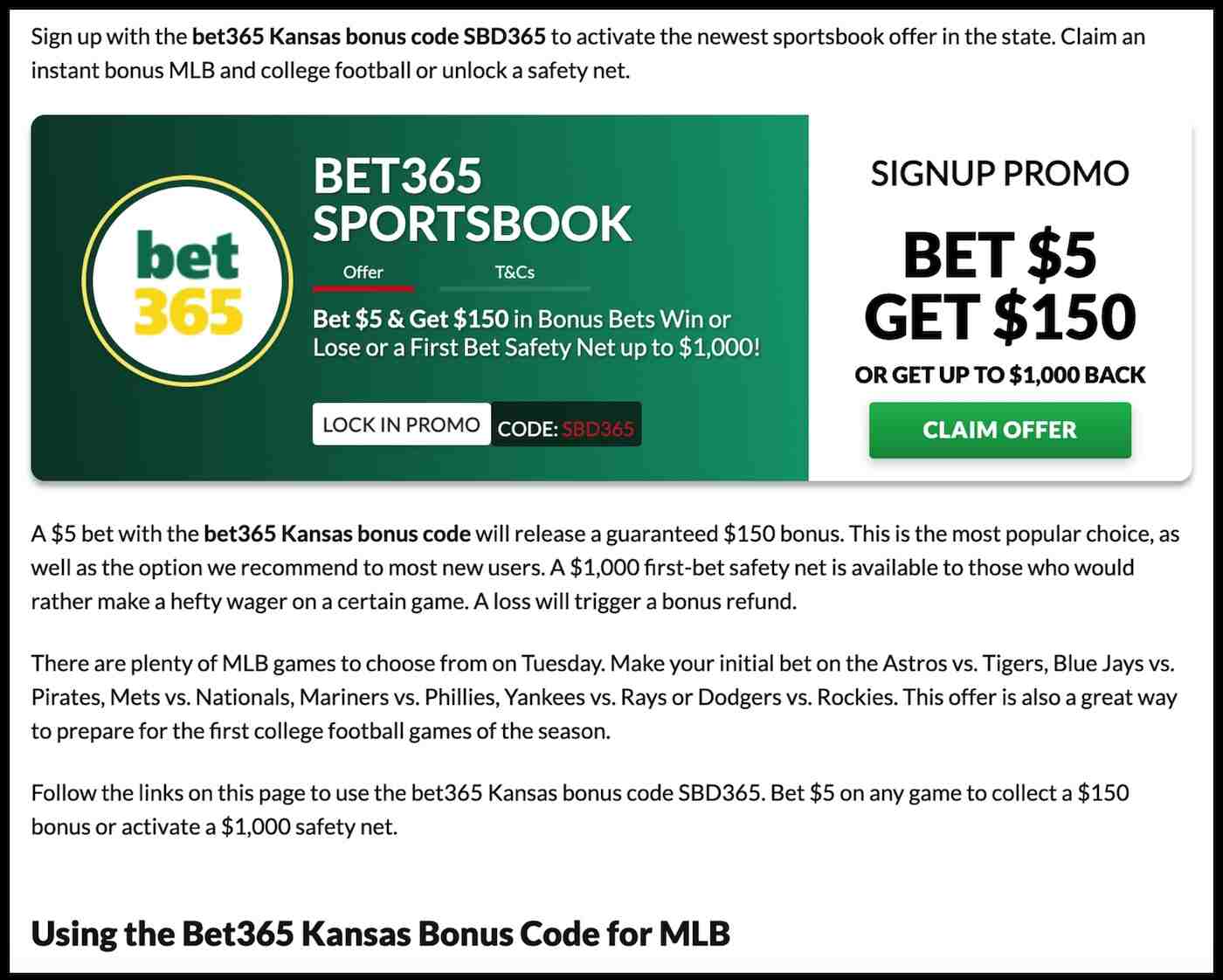
The entire article (included what we don’t show below the screenshot) is “advertising and other paid promotional material” that is not just in excess of news content, it comprises the entirety of the supposed news content. Further, this advertorial (let’s call it what it is) is delivered in Google News in all U.S. states, including those where the operator is illegal. This is just one of a multitude of Google News results for “sports betting” news that deliver nothing but blatantly promotional content from gambling affiliates, without regard to their own policy, and without regard to the legalities of sports betting in every U.S. state.
What happens if we pinpoint a sports betting operator who is in direct violation of federal and state regulations regarding gambling? Surely Google News would not allow them to be promoted on a platform that they have intended for supporting journalistic integrity, right? A simple Google News search for “Bovada”, which is an unregulated and illegal offshore betting site that has been shutdown by the FBI, delivers not a story about how Bovada continues to register U.S. players with impunity. Instead, they deliver an article that actually promotes them, through Yahoo Finance, nonetheless:
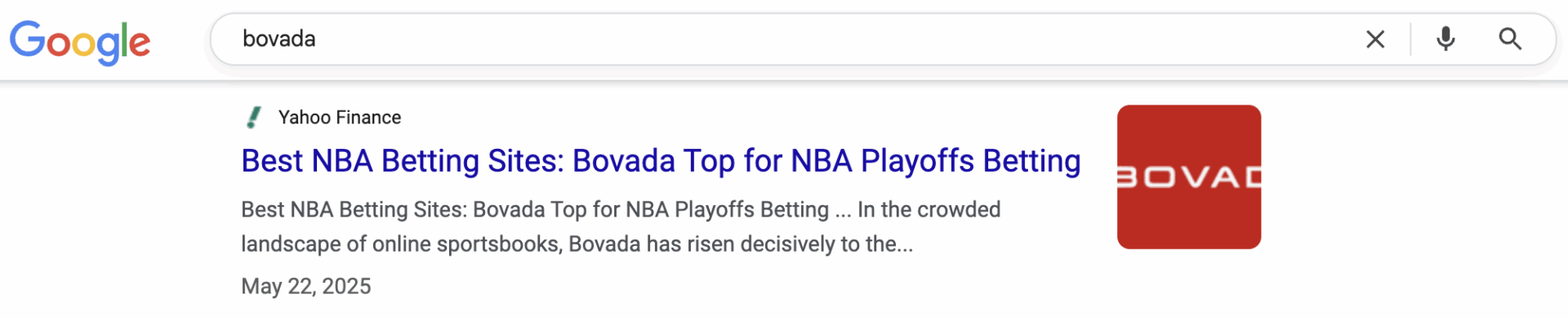
Whether or not the powers-that-be at Google are aware of what’s happening is beside the point. The intent of sharing user search experiences of this nature is to show that if Google News can’t keep illegal sports betting advertising at bay, how can Americans expect the advertising platform (which Google will reap millions in gambling operator revenue) to keep them from being exposed to harmful promotions?
Exposure to triggers to gamble are growing with each passing day. Those who are vulnerable to problematic gambling behavior must do all they can to manage their thoughts, feelings, emotions, and behavior as these triggers are presented to them on the very same tools that they use to navigate daily life. That’s what Kindbridge is here for. Reach out via your preferred form of contact below to get support.
Get Help for Problem Gambling Today
CALL +1 (877) 426-4258
OR
Email help@kindbridge.com